Book Categories:
News
Volvo and Nvidia Expand Partnership for Automated Driving Technology

Share:
Share:
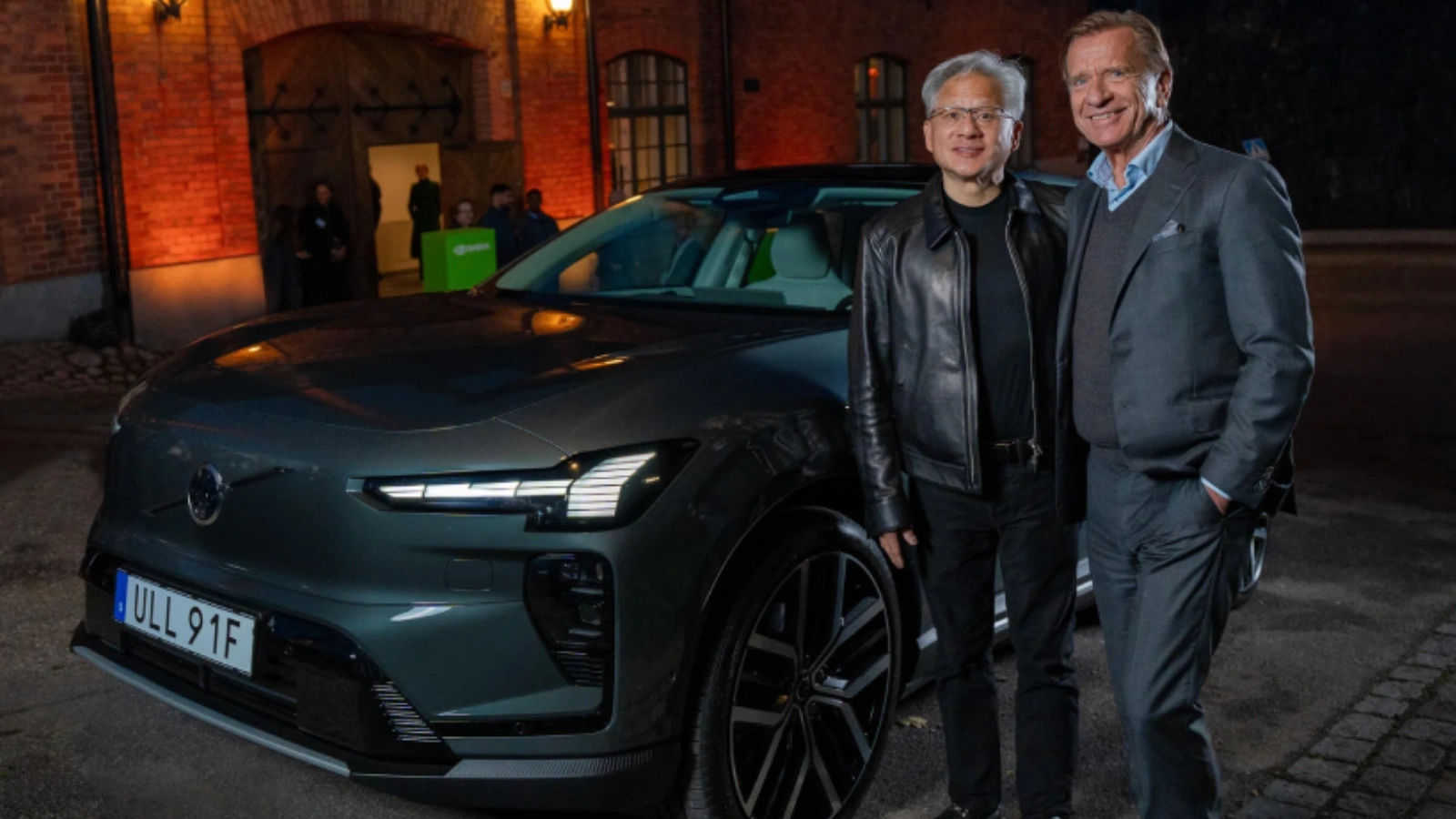
Volvo Cars is expanding its partnership with Nvidia to develop a new generation of artificial intelligence-powered driver-assistance and automated driving systems for future vehicles. Announced on October 15, 2026, the expanded collaboration will combine Volvo’s vehicle safety engineering with Nvidia’s computing hardware and driving software to help cars navigate highways, busy city streets, and parking areas.
The announcement is part of the wider automotive industry’s move towards more advanced driving assistance, including systems that can handle more driving tasks with less direct input from the driver.
For Pakistani car buyers, the development offers a look at how future premium vehicles could use AI to improve driving convenience and safety. However, neither company has confirmed a launch date, model lineup, or availability for Pakistan.
Volvo and Nvidia plan to expand their existing collaboration to develop automated driving technology for Volvo’s next generation of vehicles.
According to the companies’ announcement, the system will combine three key Nvidia technologies with Volvo’s own safety systems and engineering expertise. The technology is expected to debut in a next-generation Volvo model as part of the automaker’s broader product plans.
Key points from the announcement include:
The partnership builds on a relationship that began in 2017, according to Volvo and Nvidia.
The expanded partnership involves several computing and software components. Each has a different role in developing the automated driving system.
Hyperion is Nvidia’s sensor and computing architecture for automated driving. It provides a technical foundation for combining vehicle sensors with the computing resources needed to interpret the surrounding environment.
In practical terms, such a system can help a vehicle process information about road layouts, nearby vehicles, and other road users. Its actual capabilities depend on the sensors, software, vehicle configuration, and safety testing used in the finished car.
Halos OS is part of the technology stack identified in the partnership announcement. It supports the safety-focused development and evaluation of AI-enabled driving technology.
This is important because a driving system must do more than recognize objects. It also needs to behave predictably and meet the manufacturer’s safety requirements under the conditions for which it is designed.
The Alpamayo Stack is Nvidia’s driving software technology. It is intended to support the development of systems that can interpret complex road situations and determine appropriate driving actions.
Combined with Volvo’s engineering and safety systems, these technologies are intended to help future vehicles handle a broader range of driving scenarios. They do not, by themselves, establish that a production vehicle can drive safely in every situation.
Volvo’s announcement describes an ambition to introduce increasingly advanced driving capabilities, including a gradual move towards eyes-off and mind-off driving. However, Reuters reported that the first deployment will focus on supervised driving features, with drivers remaining responsible for the vehicle.
This distinction matters because automated driving covers different levels of capability.
| Driving technology | What it means |
|---|---|
| Conventional driver assistance | Helps with specific tasks, such as maintaining speed or supporting lane position |
| Supervised automated driving | Performs certain driving tasks while the driver remains responsible and must supervise as required |
| Eyes-off driving | In an approved operating situation, the system may allow the driver to look away from the road |
| Fully autonomous driving | A system designed to perform all driving tasks within its defined operating conditions without requiring a human driver to take over |
These descriptions are simplified. Actual responsibilities depend on the system’s approved operating conditions and applicable laws.
The expanded Volvo and Nvidia partnership should therefore not be interpreted as confirmation that future Volvo vehicles will immediately offer fully autonomous driving. The functions available to customers will depend on production readiness, safety validation, regulatory approval, and the particular vehicle.
The companies announced that the technology will make its debut in a next-generation Volvo vehicle. Reuters reported that Volvo expects the technology to appear in vehicles before 2030, with deployment planned across multiple regions, excluding China. The precise launch schedule and eligible models have not been confirmed in the available announcement.
The rollout is expected to develop in stages rather than introduce every planned feature at once.
Important details still to be confirmed include:
Reuters reported that Volvo had not yet settled on a pricing model for the features. The company also indicated that the technology would not necessarily be restricted to its most expensive vehicles.
For Pakistan, the announcement is primarily an indicator of where premium automotive technology is heading. It is not a local launch announcement, and there is no confirmed Pakistani price or availability date for the new system.
If the technology eventually reaches vehicles sold in Pakistan, its practical value will depend on how well it works with local road conditions, traffic behaviour, road markings, and the vehicle’s available safety equipment.
Improved highway assistance: More capable systems could help reduce the workload involved in maintaining speed and lane position on suitable roads.
Support in urban traffic: Future systems are being developed to handle more complicated situations, although their actual performance in dense traffic will need to be assessed.
Better integration of safety technology: Combining AI computing with vehicle safety engineering could improve how a car interprets its surroundings and responds to hazards.
More advanced premium vehicles: The partnership could influence the technology offered in future Volvo models, although the equipment supplied in each market may differ.
These are potential benefits, not confirmed outcomes for Pakistani-market vehicles.
That remains uncertain. Automated driving systems depend on factors such as road markings, signs, sensor performance, traffic conditions, and software support.
Pakistan’s mix of highways, congested city streets, motorcycles, pedestrians, and inconsistently marked roads presents challenges that would need to be evaluated before any system could be relied upon locally.
Buyers should check the exact specifications and operating limits of a vehicle sold in Pakistan rather than assume that a feature advertised overseas will work identically here.
No Pakistan-specific launch or availability details were confirmed in the sources reviewed for this article. Buyers interested in future Volvo vehicles should seek confirmation from an authorized local seller, where available, before making a purchase decision.
Volvo and Nvidia are part of a wider effort across the automotive industry to develop more advanced driver-assistance and automated driving systems.
Automakers are pursuing different approaches, ranging from supervised highway assistance to systems designed to manage more complex driving situations within defined conditions. Reuters has identified companies including Mercedes-Benz, BMW, and Ford among those working on advanced automated driving technology.
The key difference is not simply which car has the most AI computing power. A useful comparison should consider the system’s actual driving capabilities, operating limits, safety validation, regulatory approval, and availability to customers.
For Pakistani buyers, local support and the exact features supplied in the vehicle are also important. An advanced system offered in one country may not be available in another.
As manufacturers introduce more advanced systems, buyers should look beyond marketing terms such as AI driving or autonomous driving.
Before buying a vehicle with these features, check the following:
These checks can help buyers distinguish useful safety assistance from features that may have limited practical value in their driving environment.
Volvo and Nvidia are expanding their collaboration to develop AI-powered driver-assistance and automated driving technology for future Volvo vehicles, combining Nvidia’s computing and software technologies with Volvo’s safety engineering.
The technology is planned to debut in a next-generation Volvo vehicle. Reuters reported that it is expected to appear in Volvo vehicles before 2030, but an exact production launch date and model list have not been confirmed.
Not necessarily. Reuters reported that the first deployment will focus on supervised driving features. More advanced capabilities are part of Volvo’s longer-term ambition, but the final functions and their operating limits remain to be confirmed.
Nvidia Hyperion is a sensor and computing architecture intended to provide a technical foundation for automated driving systems. It supports the processing of information from vehicle sensors so the system can interpret its surroundings.
There is no confirmed Pakistan-specific availability date or pricing information in the sources reviewed. Local availability will depend on Volvo’s rollout plans, vehicle specifications, and applicable approvals.
The final pricing arrangements have not been announced. Reuters reported that Volvo had not yet chosen a pricing model for the new features. Buyers should wait for production specifications and market-specific pricing before drawing conclusions.
Volvo’s expanded partnership with Nvidia marks another step towards more advanced AI-powered driving assistance. By combining Nvidia’s Hyperion architecture, Halos OS, and Alpamayo Stack with Volvo’s safety engineering, the companies aim to develop systems that can handle a wider range of driving situations.
The technology is planned for future Volvo vehicles, but its final capabilities, pricing, and market availability remain unconfirmed. For Pakistani buyers, the most important questions will be whether these features reach locally available models and how effectively they operate on local roads.
Visit CarInfo.com.pk for automotive news, car prices in Pakistan, specifications, comparisons, and updates on emerging vehicle technology.