Book Categories:

News
Tesla Roadster 2026 Revealed: SpaceX Thrusters, Performance and Expected Launch

Share:
Share:
The Tesla Roadster 2026 has been revealed as a next-generation electric sports car featuring rocket-inspired propulsion technology developed with SpaceX. Unveiled at an event in Texas on October 15, 2026, the new Roadster attracted attention with a demonstration involving high-speed acceleration, powerful rear thrusters and a brief airborne manoeuvre.
Tesla CEO Elon Musk said production is expected to begin in 2028. However, the car remains a pre-production project, and its final specifications, production price and availability in international markets have not been fully established.
For Pakistani automotive enthusiasts, the Roadster represents a glimpse of what high-performance electric vehicles could become. Its actual appeal in Pakistan will depend on its final price, import costs, road legality, charging requirements and availability of specialist servicing.
| Feature | Details |
|---|---|
| Vehicle type | All-electric sports car |
| Manufacturer | Tesla |
| Latest reveal | October 15, 2026 |
| Production target | 2028 |
| Powertrain | Electric, with additional compressed-air thruster technology in higher configurations |
| Acceleration claim | 0 to 60 mph in approximately 0.8 seconds during a demonstrated run |
| Claimed top speed | More than 230 mph, approximately 370 km/h |
| Configurations announced | Performance, Thrust and Rocket |
| Seating | Two seats in Performance and Thrust; one in Rocket |
| Pakistan price | Not officially confirmed |
| Pakistan launch | Not announced |
| Official warranty and service details | Not confirmed for the new model |
Source: Car and Driver’s Tesla Roadster reveal report. Performance figures are reported claims associated with the reveal, not independently verified production-car results.
The latest Roadster is a redesigned version of Tesla’s long-awaited second-generation electric sports car. The original concept was presented in 2017, with production originally expected much earlier than the newly announced 2028 target.
The October 2026 presentation introduced a more unusual direction for the project. Alongside its electric powertrain, the car was demonstrated with a system of high-pressure air tanks and rocket-inspired thrusters supplied through Tesla’s collaboration with SpaceX.
The reveal also showed a fan-based system intended to generate suction beneath the car. Tesla demonstrated the prototype driving up an inverted curved structure before using its thrusters to perform an airborne manoeuvre.
These features distinguish the new Roadster from a conventional electric sports car. However, the demonstration should not be treated as proof that every advertised capability will be included in the production version or approved for normal public roads.
Performance is the central attraction of the new Tesla Roadster. During the reveal, a prototype completed a reported 0 to 60 mph run in approximately 0.8 seconds.
For context, 60 mph is approximately 96.6 km/h. An acceleration time below one second would be extraordinary for a road vehicle, so the result should be understood as a demonstration claim rather than a verified production specification.
The company also indicated a top speed exceeding 230 mph, equivalent to around 370 km/h. Musk said Tesla ultimately wants to push the car’s speed much higher, but those longer-term ambitions should not be confused with a confirmed production specification.
The higher-performance configurations are expected to supplement the electric drivetrain with compressed-air thrusters. According to the reveal coverage, the system uses ultra-high-pressure air tanks rather than conventional rocket fuel.
The proposed system is designed to deliver additional thrust for acceleration and, in the most extreme configuration, movement in directions beyond ordinary road travel.
Important engineering questions remain, including the system’s weight, energy consumption, operating limits, safety controls and practical usefulness outside a demonstration environment.
For everyday buyers, the most important question is not simply how quickly the car can accelerate, but whether the production version can deliver its promised performance consistently and safely.
The reveal coverage identifies three configurations: Performance, Thrust and Rocket. Their equipment and intended uses differ.
| Configuration | Main Features | Seating |
|---|---|---|
| Performance | Electric sports car with active rear aerodynamics and a fan-based suction system | Two |
| Thrust | Performance configuration with additional rear-mounted cold-gas thrusters | Two |
| Rocket | Active aerodynamics, suction system and additional thrusters intended for more advanced manoeuvres | One |
The Rocket configuration is the most unusual option because its design prioritises the thruster system and advanced movement capabilities over passenger capacity.
The distinction matters because the headline-grabbing demonstration involved specialist equipment that may not be available across the entire Roadster range. Buyers should wait for final production specifications before comparing the configurations on price, range or performance.
Source: Car and Driver. Final production equipment may change.
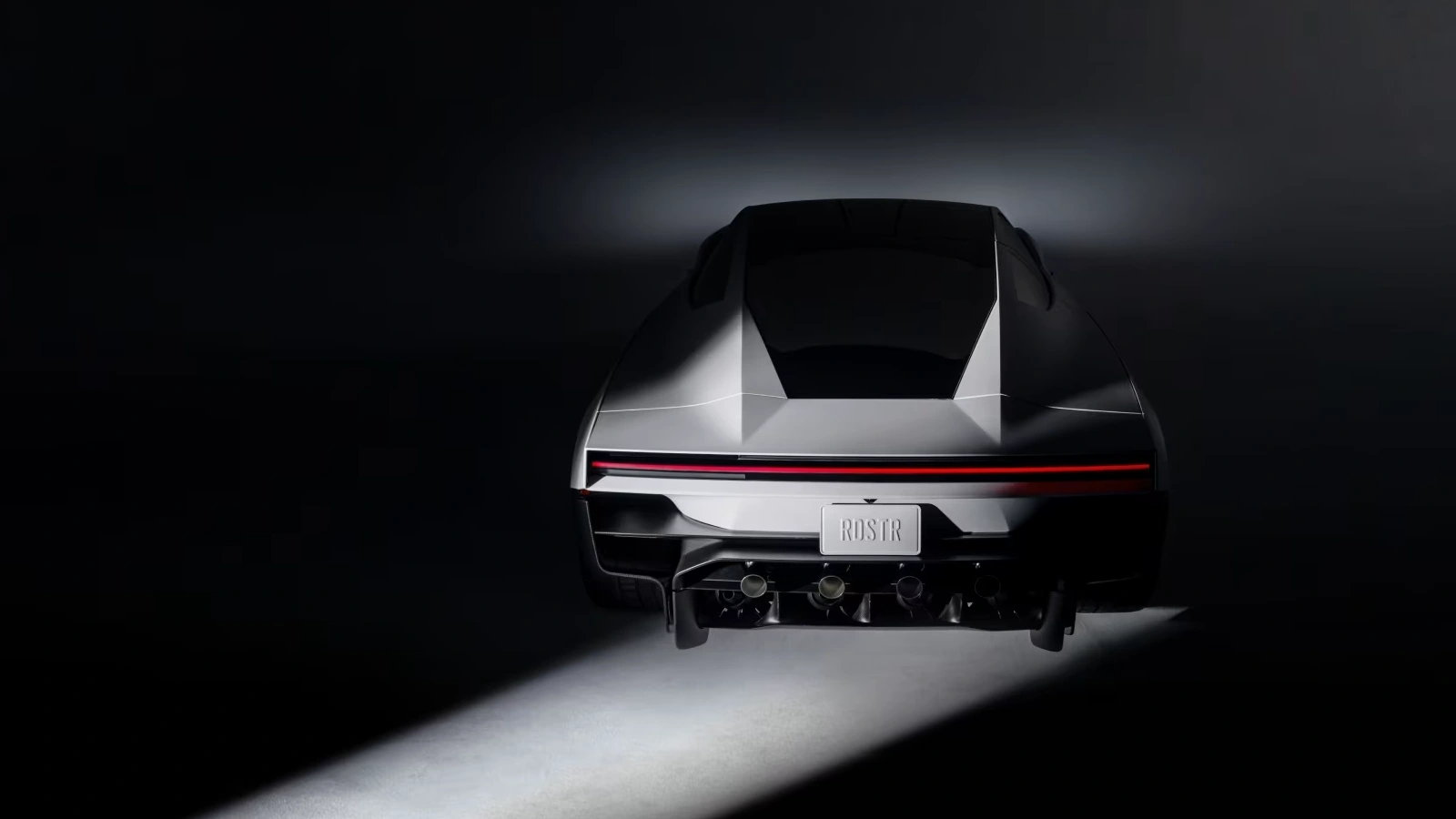
The latest prototype was presented as a low-slung, angular electric sports car.
The new Roadster uses a wedge-shaped body with styling reportedly inspired by aircraft such as the SR-71 Blackbird and F-35. Its low profile and sculpted surfaces give it a different appearance from Tesla’s mass-market sedans and SUVs.
Notable exterior elements include:
Active aerodynamics can adjust airflow to balance drag and downforce. Downforce is the aerodynamic force that presses a car toward the road, helping maintain grip at high speeds.
Tesla has not yet provided a complete, independently verified production specification covering drag coefficient, dimensions, ground clearance or vehicle weight. These details will be important when assessing the car’s real-world performance.
The reveal offered only a limited view of the Roadster’s cabin. The footage showed a two-seat layout in the conventional configurations, butterfly-style doors and a yoke-style steering wheel positioned beside a wide horizontal display.
However, a full production specification for the interior has not been published in the available reveal coverage.
Details still requiring confirmation include:
The single-seat Rocket configuration also raises questions about how the cabin will differ from the two-seat versions.
Until Tesla releases further information, it would be premature to describe particular convenience or safety features as standard equipment.
The Roadster is an electric vehicle, but its final battery capacity, charging specifications and official range for the newly revealed configurations remain unclear.
Tesla’s existing Roadster webpage still displays figures associated with the earlier concept, including a claimed 620-mile range and 1.9-second acceleration from 0 to 60 mph. Those figures should not automatically be applied to the redesigned prototype revealed in October 2026.
The latest demonstration focused heavily on acceleration and thruster-assisted manoeuvres rather than providing a complete battery and charging specification.
Before buying an electric sports car, customers should consider:
These considerations will be especially important in Pakistan, where charging infrastructure and specialist electric-vehicle support vary by location.
The official Tesla Roadster 2026 price in Pakistan has not been announced.
There is no verified Pakistani ex-factory price or local variant-wise price list for the newly revealed model. Tesla has also not confirmed an official Pakistani launch or local delivery schedule.
The Roadster is expected to occupy the high-end electric sports-car segment, but a reliable Pakistani price cannot be calculated without confirmed production pricing, import arrangements and applicable charges.
If the car becomes available through private import, its final cost could depend on:
An international reservation payment, if offered, is not the same as the vehicle’s complete purchase price or its final on-road cost in Pakistan.
Buyers should request a written, itemised quotation from a qualified importer and confirm the applicable import rules before making a financial commitment.
The Roadster could appeal to collectors and enthusiasts interested in high-performance electric vehicles. However, its suitability for Pakistan will depend on more than acceleration figures.
Owners would need access to compatible charging equipment. Buyers should confirm the car’s charging connector, charging limits and compatibility with available equipment before importing it.
A low sports car may be difficult to use on damaged roads, steep ramps and uneven surfaces. The new model’s final ground clearance has not been confirmed, so its practicality on Pakistani roads cannot yet be assessed accurately.
Tesla has not announced a local service network or official parts supply arrangement for the new Roadster in Pakistan. Specialist repairs, body parts and high-performance components could therefore require overseas sourcing if no authorised local support becomes available.
The Roadster’s resale market in Pakistan is difficult to predict. Its price, import status, maintenance requirements and availability of replacement parts would all affect future demand.
The prototype’s thruster-assisted demonstrations do not establish that every configuration will be legal for public-road use. Buyers would need to confirm the applicable registration, roadworthiness and safety requirements before importing or operating the car.
For most Pakistani motorists, these practical considerations will be more important than the vehicle’s headline acceleration claim.
| Pros | Cons |
|---|---|
| Extremely ambitious performance targets | Production is not expected until 2028 |
| Electric powertrain | Final battery and range details remain unconfirmed |
| Advanced aerodynamic concepts | Thruster technology adds complexity |
| Distinctive exterior design | Price and Pakistani availability are unknown |
| Multiple configurations for different performance goals | Local service and spare-parts support are unconfirmed |
These points reflect the announced concept and available reveal information, not a completed road test or long-term ownership assessment.
The Roadster is aimed at a different level of performance from ordinary electric sedans and crossovers. However, a meaningful comparison requires confirmed production specifications and prices for all vehicles involved.
Potential international comparison models include the Rimac Nevera and the Lotus Evija, both high-performance electric hypercars. Their actual performance, availability and pricing differ, and neither should be assumed to be a direct match for every Roadster configuration.
For Pakistani buyers, there is currently no confirmed local-market comparison based on official prices and available dealer support.
Tesla has indicated that production is expected to begin in 2028. This is a stated target, not a confirmed customer delivery date, and further delays remain possible.
The official price in Pakistan has not been announced. Any estimated import cost would depend on the final international price, exchange rates, shipping and applicable duties and taxes.
During its October 2026 reveal, a prototype reportedly accelerated from 0 to 60 mph in approximately 0.8 seconds. Tesla also indicated a top speed exceeding 230 mph, or about 370 km/h. These figures should not be treated as independently verified production specifications.
The reveal demonstrated a prototype performing an airborne manoeuvre using specialised thrusters. This does not establish that the production car will be capable of sustained flight or that such manoeuvres will be permitted on public roads.
No. The Roadster is an electric vehicle. The additional thruster system described during the reveal uses high-pressure air rather than conventional petrol-powered propulsion.
The announced Performance and Thrust configurations have two seats. The Rocket configuration is described as a single-seat version.
Tesla has not announced an official Pakistani launch. Private import may be possible depending on the applicable rules, vehicle specifications and import arrangements, but availability and registration eligibility must be confirmed.
The final official driving range for the redesigned model has not been established in the available reveal information. Tesla’s older Roadster webpage displays a 620-mile claim for the earlier concept, which should not be assumed to apply to the new configurations.
The Tesla Roadster 2026 is one of the most unusual electric sports-car projects revealed this year. Its combination of electric performance, active aerodynamics and SpaceX-inspired thrusters sets it apart from conventional road cars.
However, the most dramatic claims still need to be evaluated against final production specifications, independent testing and road-safety requirements. With production targeted for 2028, buyers should avoid treating the prototype’s performance or availability as guaranteed.
For Pakistani enthusiasts, the biggest unanswered questions concern the final price, import costs, charging compatibility, road legality and access to specialist maintenance.
Visit CarInfo.com.pk for more automotive prices, specifications, electric-vehicle news and buying guides relevant to the Pakistani market.